Writing & Communication
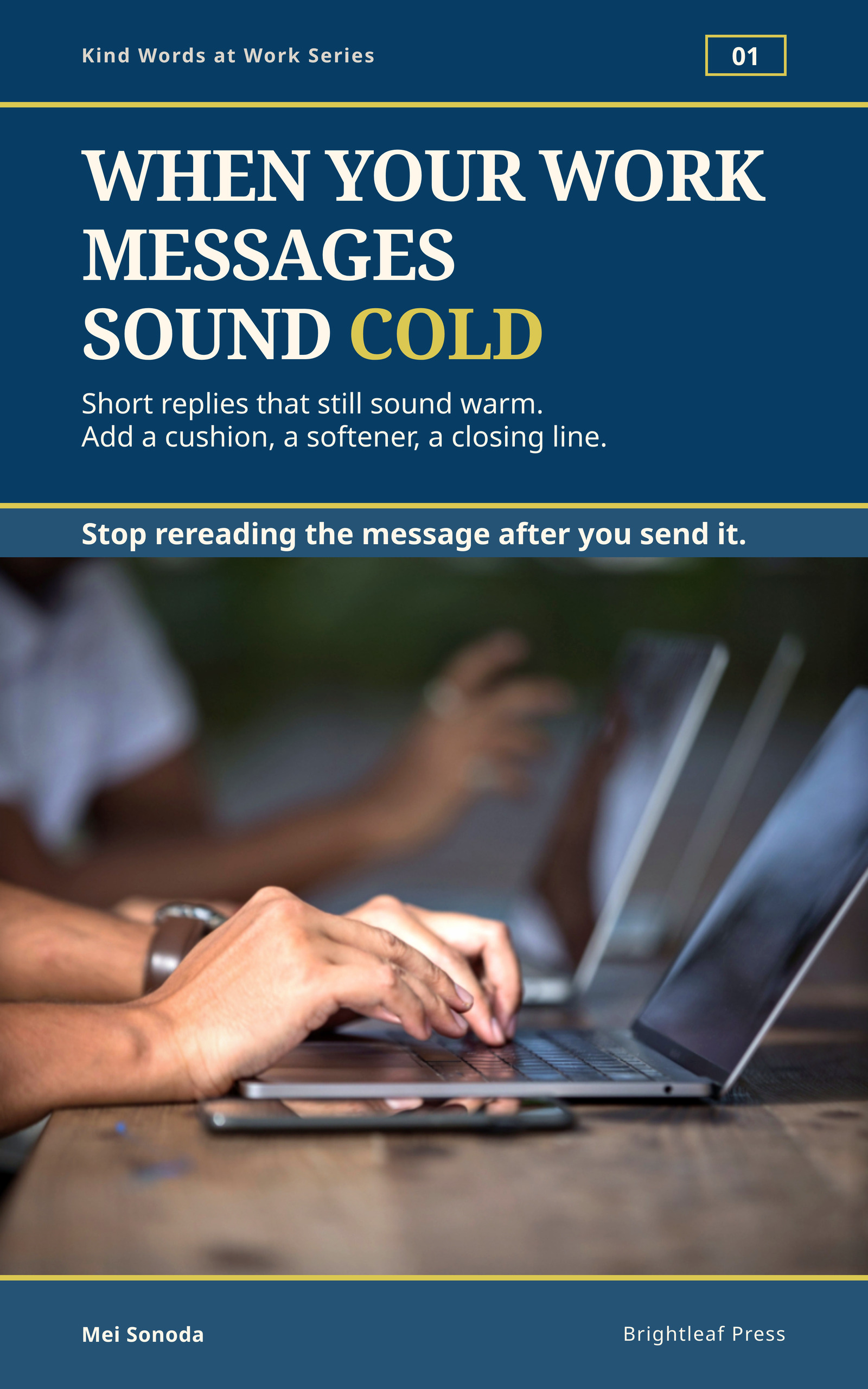
When Your Work Messages Sound Cold
How to Write Brief, Warm Emails and Workplace Chats Without Overexplaining
You send a perfectly clear work email—and then wonder whether it sounded annoyed. You answer quickly in chat—and worry that “Got it” felt colder than you meant. So you add more words, only to sound stiff or overexplained.
Your messages do not sound cold because you are cold. In the rush to be efficient, you simply removed the small signs that say, “I see you, and I care how this lands.”
When Your Work Messages Sound Cold is a practical, beginner-friendly guide to writing concise emails and workplace chats that remain warm, clear, and easy to act on. It does not ask you to memorize elaborate scripts or turn every reply into a paragraph. Instead, it gives you five small, reusable parts: a soft opening, gentler wording, acknowledgment, a closing line, and better order.
Through realistic before-and-after examples, you will learn how to: - Keep a short message from sounding abrupt - Make requests clear without sounding demanding - Say no firmly without leaving the door half open - Follow up or correct a mistake without blaming the person - Match the size of a thank-you or apology to what actually happened - Add one warm nod to a fast workplace chat reply
The goal is not a perfect message. It is one thoughtful line that helps the reader understand your meaning without guessing at your tone. Over time, those small signs of care become something larger: trust.
Book 1 of the Kind Words at Work Series. It stands fully on its own.